Case study
Atlash Hub
A high-performance product discovery platform and developer registry with a scalable moderation workflow.
 next
next typescript
 drizzle
 postgresql
 tailwindcss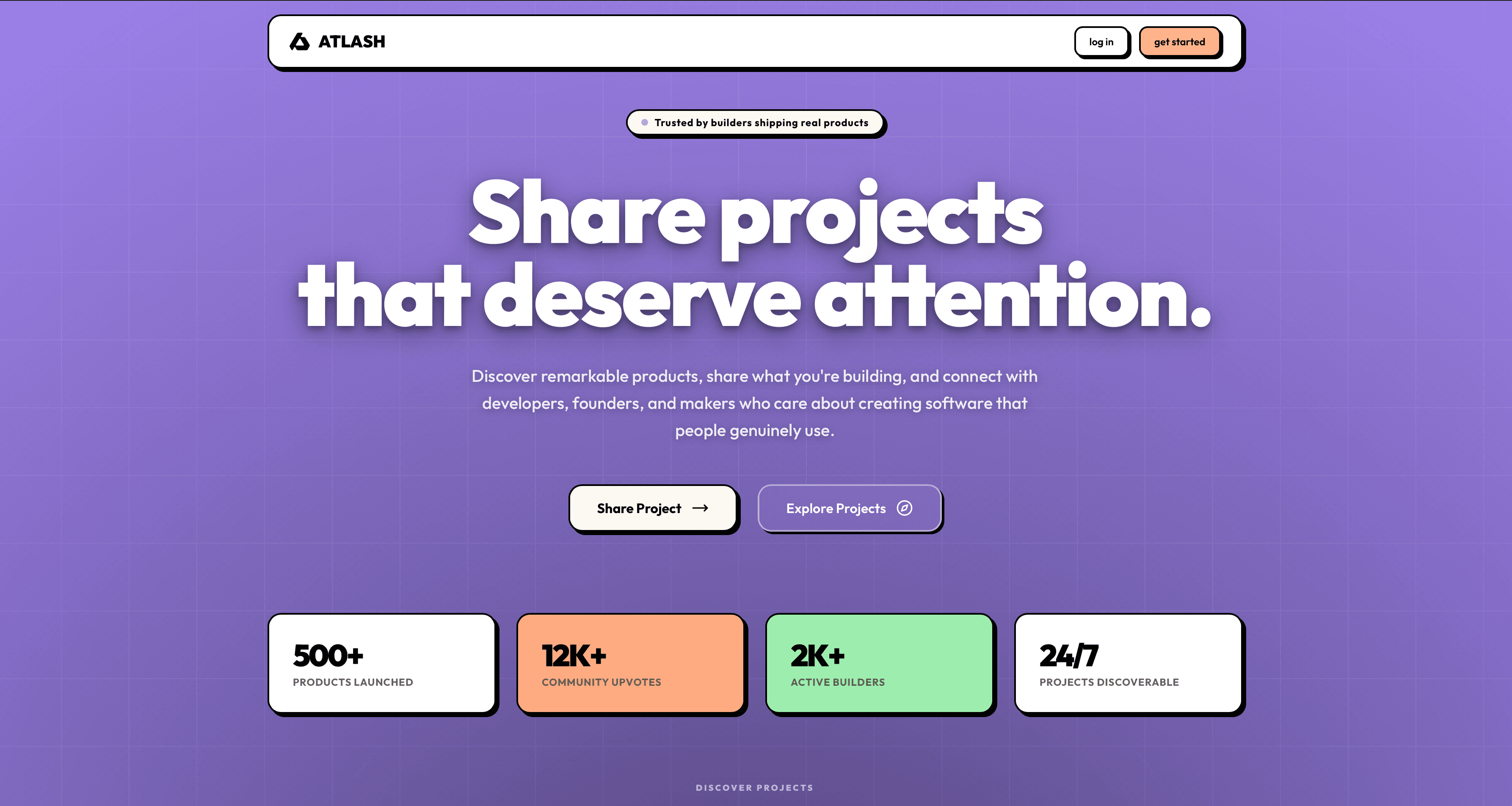
 Github
Overview
Atlash Hub was built to solve the "Discovery Gap"—the problem where great developer tools and startups get lost in fragmented repositories or Slack channels.
Unlike a static directory, I architected this as a curated ecosystem. It features a server-side validation pipeline where builders can showcase their work, and administrators can maintain quality through a rigorous moderation dashboard.
Highlights
The Auth Pivot: Clerk to Better Auth
One of the most significant engineering decisions was migrating the entire authentication layer. Originally built with Clerk, I realized the need for deeper control over session persistence and custom RBAC (Role-Based Access Control). I rebuilt the flow using Better Auth, giving the application full ownership of the database schema and significantly improving authorization flexibility.
Server-First Architecture
To ensure the platform remains fast and secure, I followed a Server-First approach. By leveraging Next.js 16 Server Components and Server Actions, I kept the client-side bundle minimal. This centralized the business logic, ensured end-to-end type safety with Zod, and provided scalable database access via Neon PostgreSQL.
Validation Pipeline
I implemented a multi-stage submission workflow. Every product passes through a server-side validation check before hitting the database, ensuring that only verified, high-quality resources reach the public discovery page.
Learnings
- Database Consistency: Navigating an auth migration taught me the importance of schema-first integrity and handling complex data relationships during a transition.
- Ownership vs. Abstraction: Moving away from Clerk taught me when to use third-party tools and when building a custom implementation is necessary for long-term scalability.
- State Management: Using Next.js Server Actions reduced the need for heavy client-side state, making the app feel more native and responsive.
Next steps
- Global Search: Implementing PostgreSQL full-text search or Algolia for near-instant resource discovery.
- Analytics Dashboard: Building a real-time tracking system for product engagement and views.
- Event-Driven Notifications: Using Redis or Upstash to trigger notifications for makers when their products are validated.
Atlash Hub represents my approach to full-stack engineering: building systems that are not just functional, but technically superior and ready for global scale.